

Are small coil wires magnetic? That's a question I get asked a lot as a supplier of Small Coil Wire. It's a topic that combines a bit of science with practical applications, and I'm excited to dive into it with you.
Let's start with the basics. Magnetism is all about the alignment of tiny magnetic domains within a material. When these domains are lined up in the same direction, the material becomes magnetic. Now, not all materials have the ability to become magnetic. In general, only certain metals like iron, nickel, and cobalt, along with some of their alloys, can exhibit magnetic properties.
So, are small coil wires magnetic? Well, it depends on what they're made of. A lot of the small coil wires I supply are made from iron or iron-based alloys. Iron is ferromagnetic, which means it can be magnetized easily. When you have a small coil wire made of iron, it has the potential to be magnetic.
For example, Black Annealed Wire, which is a type of small coil wire, is often used in various applications where a bit of flexibility and strength are needed. Since it's made of iron, it can be magnetic. The annealing process, which involves heating and then slowly cooling the wire, can actually affect its magnetic properties. Annealing can make the iron's crystal structure more uniform, which might enhance its magnetic behavior.
Another popular type of small coil wire I offer is Hot Dipped Galvanized Iron Wire. This wire is coated with a layer of zinc through a hot-dipping process. The zinc coating is mainly for corrosion protection, but it doesn't change the fact that the underlying wire is made of iron. So, this wire is also magnetic.
But here's the thing: just because a wire is made of a magnetic material doesn't mean it's always magnetic. In its normal state, the magnetic domains in the wire might be randomly oriented, so the wire doesn't show any obvious magnetic properties. However, if you expose the wire to a strong magnetic field, the domains can align, and the wire will become magnetic.
There are also some factors that can reduce or eliminate the magnetic properties of small coil wires. For instance, if the wire is heated to a very high temperature, called the Curie temperature, the magnetic domains will become disordered again, and the wire will lose its magnetism. Once it cools down, it might regain some of its magnetic properties, but it depends on how it's cooled and other conditions.
Now, let's talk about why the magnetic properties of small coil wires matter. In many industries, the magnetic nature of these wires can be a huge advantage. In the electronics industry, magnetic wires can be used in transformers, inductors, and other components. The magnetic field created by the wire can be used to transfer energy or store electrical energy in a magnetic field.
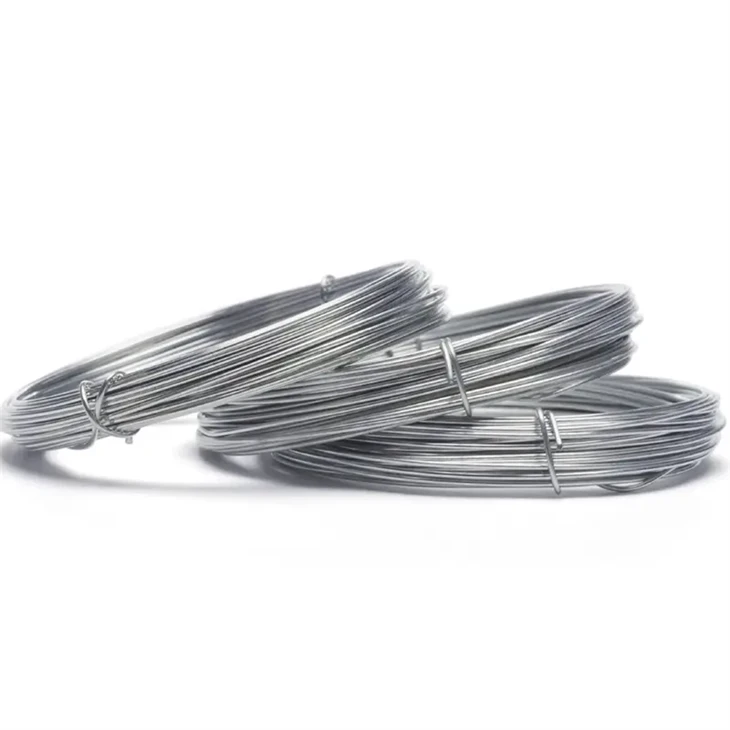

In the construction industry, magnetic small coil wires can be used in applications where they need to be held in place by magnets. For example, in some prefabricated building systems, magnetic wires can be used to attach components together temporarily during the assembly process.
In the manufacturing of toys and novelty items, magnetic wires can add an element of fun and interactivity. Kids can use magnets to move and manipulate objects made with these wires, which can be a great way to learn about magnetism.
As a supplier, I've seen firsthand how the magnetic properties of small coil wires can make a difference in different applications. That's why I always make sure to provide high-quality wires that have consistent magnetic properties. Whether you're using the wires for a simple DIY project or a complex industrial application, you can count on the wires I supply to perform as expected.
If you're interested in learning more about the magnetic properties of small coil wires or if you have a specific application in mind, I'd love to hear from you. I can help you choose the right type of wire based on your needs and provide you with all the technical information you need. You can reach out to me to start a conversation about your requirements. We can discuss the best options for your project and get you the small coil wires you need at a great price.
So, if you're in the market for small coil wires, don't hesitate to contact me. Let's work together to find the perfect solution for your magnetic or non - magnetic wire needs.
References
- "Magnetism and Magnetic Materials" by David Jiles
- "Introduction to Materials Science for Engineers" by James F. Shackelford


