

Barbed wire, a seemingly simple and unassuming invention, has played a surprisingly significant role in historical battles. As a barbed wire supplier, I've seen firsthand how this product has evolved over time, but its historical impact is truly fascinating. Let's dive into the role of barbed wire in historical battles and see how it changed the face of warfare.
The Invention and Early Use of Barbed Wire
Barbed wire wasn't initially invented for warfare. It was first patented in the United States in the 1860s and 1870s as a way to mark boundaries on the vast open ranges of the American West. Ranchers needed an inexpensive and effective way to keep their livestock in and predators out. The barbs on the wire made it a formidable deterrent, and it quickly became popular.
However, it didn't take long for the military to recognize its potential. By the late 19th century, barbed wire was being used in military fortifications. It was relatively easy to transport and set up, making it a practical choice for creating barriers in the field. The rough terrain in many battle - prone areas could be quickly cordoned off with barbed wire fences, slowing down enemy movements.
Barbed Wire in the Boer War (1899 - 1902)
The Boer War was one of the first major conflicts where barbed wire was used extensively in military operations. The British forces, facing a determined guerrilla - style resistance from the Boers, turned to barbed wire to create a series of blockhouses and fortified lines across South Africa.
These barbed wire barriers were not only used to prevent the Boer commandos from moving freely but also to control the movement of civilians. The British used the wire to corral large numbers of people into concentration camps, a controversial strategy that had a profound impact on the local population.

The Boers, in turn, had to adapt their tactics. Their hit - and - run style of warfare was hampered by the vast networks of barbed wire. They often had to spend time cutting through the wire, exposing themselves to British fire in the process. This shift in tactics was a clear indication of how barbed wire could influence the outcome of a battle.
World War I: The Age of Barbed Wire
World War I is perhaps the most well - known example of barbed wire's role in battle. The war on the Western Front was characterized by trench warfare, and barbed wire was an integral part of the trench defense system.
Trenches were fortified with layers upon layers of barbed wire, often stretched out in front of the trenches for hundreds of yards. These wire entanglements were designed to stop advancing infantry in their tracks. The barbs were sharp and the wires were twisted and knotted together, creating a nearly impenetrable barrier.
For soldiers going "over the top" in a frontal assault, the barbed wire was a nightmare. They would have to wade through the wire under heavy enemy fire, often getting caught and injured in the process. Many attacks failed simply because the soldiers couldn't get through the barbed wire.
To counter this, new weapons and tactics were developed. Tanks were introduced, in part, to break through barbed wire and other obstacles. Artillery was also used to try to destroy the wire before an infantry attack. But even with these new technologies, barbed wire remained a significant challenge throughout the war.
Different Types of Barbed Wire Used in Battle
There were several types of barbed wire used in historical battles. One of the most common was the Traditional Twist Barbed Wire. This type of barbed wire consisted of two or more strands of wire twisted together, with barbs spaced at regular intervals. The twisting of the wires made the barbed wire stronger and more difficult to cut.
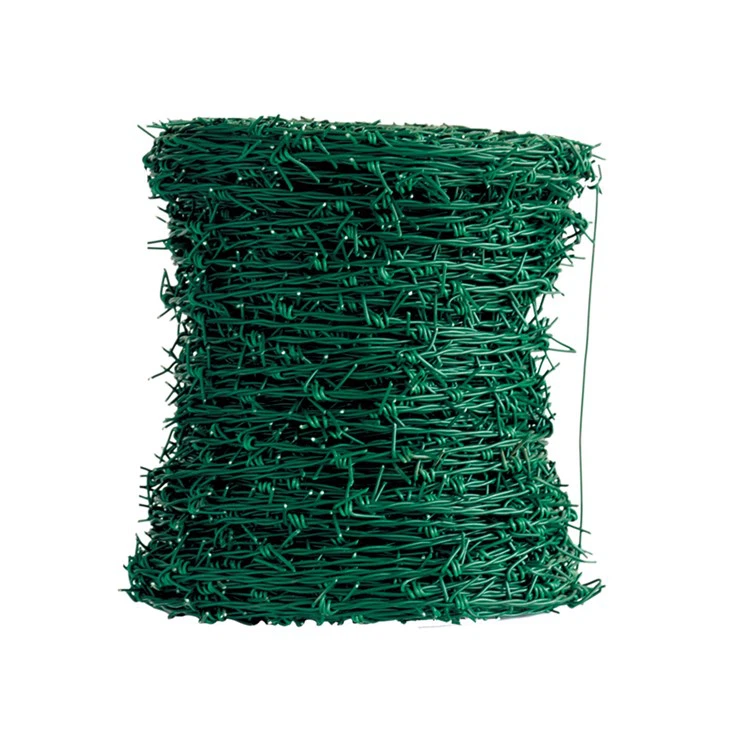
Another type was the PVC Coated Barbed Wire. The PVC coating provided some protection against corrosion, which was a major issue in wet and muddy battlefields. It also made the wire slightly more flexible, which could be an advantage when setting up the barriers.
Of course, the standard Barbed Wire was also widely used. These rolls of wire could be quickly unrolled and set up to create barriers in a hurry.
Barbed Wire in Modern Warfare
While the use of barbed wire has changed in modern warfare, it still has its place. In modern conflicts, barbed wire is often used in perimeter security around military bases and checkpoints. It's a cost - effective way to deter unauthorized access and slow down potential intruders.
In addition, the concept of using barriers to control movement has evolved. Modern military operations may use more advanced materials and technologies, but the basic idea of creating obstacles to impede the enemy's progress remains the same.
The Impact of Barbed Wire on Battlefield Strategy
The introduction of barbed wire had a profound impact on battlefield strategy. It forced military commanders to think differently about how to conduct attacks and defend positions. Instead of relying on large - scale frontal assaults, new strategies had to be developed.
For example, the use of flanking maneuvers became more important. Instead of trying to break through a heavily fortified barbed wire - protected front line, armies would try to attack from the sides or rear. This required better intelligence and more coordinated movements.
The development of new technologies, as mentioned earlier, was also a direct result of the challenges posed by barbed wire. Tanks, for instance, were a game - changer in terms of breaking through these barriers. And the use of artillery to target barbed wire was refined over time to make it more effective.
Conclusion
Barbed wire has come a long way from its humble beginnings as a ranching tool. Its role in historical battles has been significant, changing the way wars were fought and influencing the development of military technologies and strategies.
As a barbed wire supplier, I'm proud to be a part of an industry with such a rich history. Whether you're looking for Traditional Twist Barbed Wire, PVC Coated Barbed Wire, or our standard Barbed Wire, we have the products you need.
If you're interested in purchasing barbed wire for security or other purposes, don't hesitate to reach out to us for a talk about your requirements. We're here to help you find the right solution for your needs.
References
- Keegan, John. The First World War. Random House, 1998.
- Turtledove, Harry. The Great War: American Front. Baen Books, 1992.
- Van Creveld, Martin. Command in War. Harvard University Press, 1985.


