

Hey there! If you're in the market for a pole anchor, you've come to the right place. I'm a supplier of top - notch pole anchors, and today I'm going to share with you the best way to deploy a pole anchor.
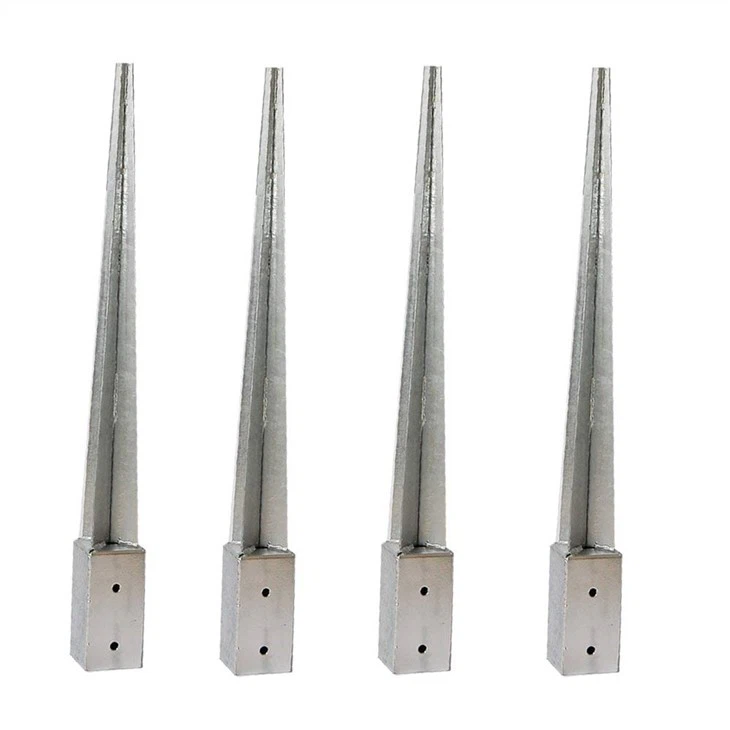
First off, let's understand what a pole anchor is and why it's so important. A pole anchor is a device used to secure poles in various applications, such as fencing, signposts, and even in some maritime settings for small boats. They come in different shapes and sizes, like the Square Pole Anchor and the Round Pole Anchor, and we also offer the Fence Post Spike Post Anchor.
Pre - deployment Checks
Before you start the actual deployment, there are a few things you need to do. First, assess the location where you'll be placing the pole anchor. Is the ground hard or soft? For soft ground, you might need to use a different type of anchor compared to when the ground is hard. You can use a simple soil probe to determine the soil composition. If the soil is sandy, you'll want an anchor that can grip well. For clayey soil, something with a wide base might be more effective.
Next, measure the hole or the space where the pole will go. Ensure it's the right size for your anchor. If the hole is too small, you won't be able to insert the anchor properly. If it's too big, the anchor won't hold the pole securely. Also, check the pole itself. Make sure it's straight and free of any damage that could affect the installation.
Tools You'll Need
You'll need a few basic tools for the deployment. A mallet or a hammer is essential for driving the anchor into the ground. If you're dealing with large or heavy - duty anchors, a sledgehammer might be more appropriate. A level is also important to ensure that the pole is straight once it's in place. You don't want your fence or signpost leaning to one side. Additionally, a tape measure can come in handy for accurate measurements.
Step - by - Step Deployment
- Mark the Spot: Use a stake or a marker to clearly indicate where you want to place the anchor. This will help keep everything aligned and make the process more efficient.
- Dig the Hole (if needed): For some types of pole anchors, you might need to dig a hole. The depth and width of the hole will depend on the size of the anchor. As a general rule, the hole should be about 1/3 to 1/2 the length of the anchor. Make sure the sides of the hole are straight and the bottom is flat.
- Insert the Anchor: Carefully place the anchor into the hole or on the marked spot. If it's a driven anchor, start by gently tapping it with the mallet or hammer to get it started. Then, gradually increase the force as the anchor goes deeper into the ground. Keep checking with the level to make sure it's going in straight.
- Secure the Pole: Once the anchor is in place, insert the pole into the anchor. Some anchors have a specific locking mechanism, like a pin or a clamp. Use these to secure the pole firmly to the anchor. Make sure the pole is centered and straight within the anchor.
- Backfill (if applicable): If you dug a hole, backfill it with soil or gravel. Tamp the backfill down firmly around the anchor to provide additional stability. This helps prevent the anchor from shifting over time.
Special Considerations
In some cases, you might encounter obstacles underground, like rocks or tree roots. If you hit a rock, try to avoid damaging the anchor. You can either move the location of the anchor slightly or use a rock - drilling tool to break through the rock. Tree roots can be a bit more challenging. If possible, try to cut through the roots with a saw or an axe. However, be careful not to damage the structural integrity of nearby trees.
If you're deploying pole anchors in an area with high winds or heavy loads, you might want to consider using additional support mechanisms. For example, you could use guy wires to provide extra stability to the pole. Guy wires are cables that are attached to the pole at an angle and then anchored to the ground.
Maintenance
Once the pole anchor is deployed, it's important to perform regular maintenance. Check the anchor and the pole for any signs of damage, like rust or cracks. If you notice any issues, address them immediately. For example, if the anchor is starting to rust, you can apply a rust - resistant coating to prevent further corrosion.

Also, check the tightness of any bolts or clamps. Over time, they can loosen due to vibrations or changes in temperature. Make sure to tighten them regularly to keep the pole secure.
Conclusion
Deploying a pole anchor might seem like a daunting task, but if you follow these steps, you'll be able to do it successfully. Remember, choosing the right anchor for the job is just as important as the deployment process. That's why we offer a variety of pole anchors, like the Square Pole Anchor, Round Pole Anchor, and Fence Post Spike Post Anchor.
If you're interested in purchasing our high - quality pole anchors or have any questions about deployment, feel free to reach out to us. We're here to help you make the best choice for your needs. Whether you're working on a small DIY project or a large - scale commercial installation, we've got the right anchor for you. Let's keep those poles standing tall and secure together!
References
- "Structural Handbook for Permanent Wood Structures". American Wood Council.
- "Soil Mechanics in Engineering Practice". Karl Terzaghi.


