

As a seasoned supplier in the pole anchor industry, I've had the privilege of witnessing firsthand the diverse applications and unique features of different types of pole anchors. These essential components play a crucial role in securing poles for various structures, from fences and signage to flagpoles and utility poles. In this blog post, I'll delve into the different types of pole anchors available in the market, their characteristics, and their ideal applications.
Pointed Pole Anchor
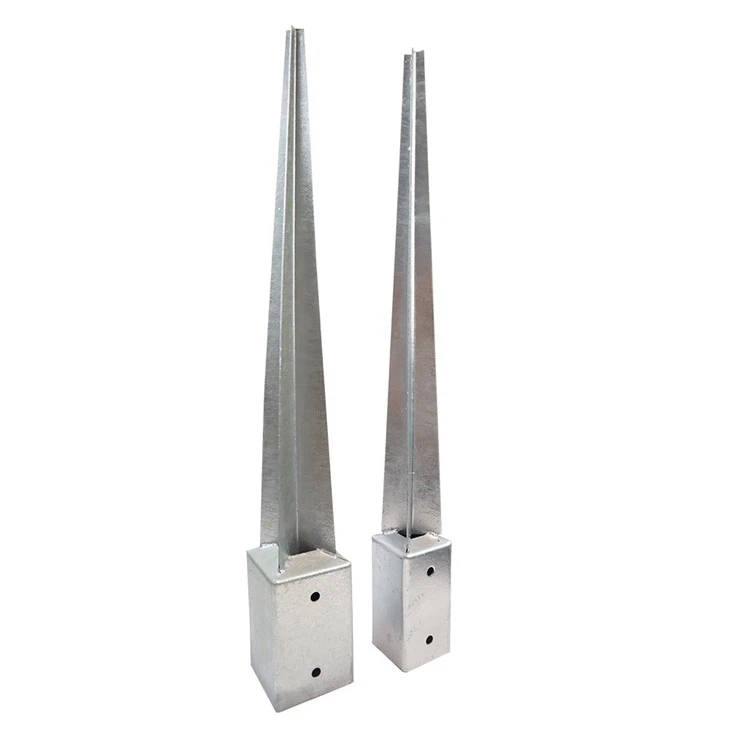
The Pointed Pole Anchor is a popular choice for applications where easy installation in soft to medium - firm soil is required. Its pointed tip allows for straightforward penetration into the ground with minimal effort. This type of anchor is typically made from high - strength steel, ensuring durability and long - term performance.
The pointed design enables the anchor to be driven deep into the soil, providing a stable foundation for the pole. It is often used in temporary or semi - permanent structures, such as event signage, small fences, and lightweight flagpoles. The ease of installation also makes it a favorite among DIY enthusiasts and contractors who need to set up poles quickly.
One of the key advantages of the pointed pole anchor is its versatility. It can be used in a variety of soil conditions, although it performs best in soils that are not overly compacted. In sandy or loamy soils, the pointed anchor can be driven in with a simple mallet or a mechanical driving tool.
Galvanized Pole Anchor
The Galvanized Pole Anchor stands out for its exceptional corrosion resistance. Galvanization is a process where a layer of zinc is applied to the steel anchor, protecting it from rust and other forms of corrosion. This makes the galvanized pole anchor an excellent choice for outdoor applications, especially in areas with high humidity, saltwater exposure, or acidic soil conditions.
Galvanized pole anchors are commonly used in marine environments, such as docks and piers, where poles need to withstand the harsh effects of saltwater. They are also suitable for coastal areas and industrial settings where corrosion can be a significant issue. The zinc coating not only protects the anchor but also extends its lifespan, reducing the need for frequent replacements.
In addition to its corrosion - resistant properties, the galvanized pole anchor offers the same strength and stability as other steel anchors. It can be used for a wide range of pole - supported structures, including large fences, heavy - duty signage, and utility poles. The galvanized finish also gives the anchor an aesthetically pleasing appearance, making it a popular choice for applications where appearance matters.
Square Pole Anchor
The Square Pole Anchor is designed to provide enhanced stability for square - shaped poles. Its square shape matches the cross - section of the pole, creating a more secure fit compared to round anchors. This type of anchor is often used in applications where the pole needs to be held firmly in place, such as in high - wind areas or for structures that are subject to significant lateral forces.
Square pole anchors are typically made from thick - walled steel, which adds to their strength and stability. They are commonly used in the construction of fences, pergolas, and outdoor structures where square poles are the preferred choice. The square design also helps to prevent the pole from rotating within the anchor, ensuring that the structure remains upright and stable.
Another advantage of the square pole anchor is its ease of installation. It can be easily aligned with the square pole, and the flat sides make it easier to level the pole during the installation process. This reduces the time and effort required for installation, making it a cost - effective solution for many construction projects.
Helical Pole Anchor
Helical pole anchors, also known as screw anchors, are designed with a helical plate or series of plates that are screwed into the ground. This type of anchor is ideal for areas with poor soil conditions, such as clay or peat soils, where traditional anchors may not provide sufficient stability. The helical design allows the anchor to be screwed deep into the ground, where it can grip the soil and provide a strong foundation for the pole.
Helical pole anchors are commonly used in the installation of utility poles, cell towers, and large - scale signage. They are also suitable for structures that require a high degree of stability, such as buildings on stilts or floating docks. The installation process for helical pole anchors is relatively quick and can be done with specialized equipment, reducing the disruption to the surrounding area.
One of the key benefits of helical pole anchors is their adjustability. They can be installed at different depths and angles to accommodate the specific requirements of the project. This makes them a versatile solution for a wide range of applications.
Concrete - Filled Pole Anchor
Concrete - filled pole anchors are created by pouring concrete into a pre - installed anchor tube. This type of anchor provides exceptional strength and stability, making it suitable for heavy - duty applications. The concrete fills the void inside the anchor tube, creating a solid mass that resists movement and provides a strong foundation for the pole.
Concrete - filled pole anchors are commonly used in the construction of large - scale structures, such as high - rise buildings, industrial facilities, and bridges. They are also used for utility poles and other structures that need to withstand significant vertical and lateral loads. The installation of concrete - filled pole anchors requires careful planning and the use of specialized equipment, but the end result is a highly reliable and long - lasting foundation.
Rock - Bolt Pole Anchor
Rock - bolt pole anchors are designed for use in rocky or hard - soil conditions. They consist of a bolt that is drilled into the rock or hard soil and secured with a grout or epoxy. This type of anchor provides a strong and permanent attachment for poles in areas where traditional anchors cannot be used.
Rock - bolt pole anchors are commonly used in mountainous regions, quarries, and areas with exposed bedrock. They are also used in the construction of communication towers, power lines, and other structures that need to be anchored in hard ground. The installation of rock - bolt pole anchors requires specialized drilling equipment and expertise, but they offer a reliable solution for challenging soil conditions.
Conclusion
In conclusion, the choice of pole anchor depends on several factors, including the type of soil, the size and weight of the pole, the environmental conditions, and the specific application. As a pole anchor supplier, I understand the importance of selecting the right anchor for each project. Whether you need a pointed anchor for easy installation in soft soil, a galvanized anchor for corrosion - resistant applications, or a square anchor for enhanced stability, we have a solution to meet your needs.
If you're in the process of planning a project that requires pole anchors, I encourage you to reach out to us. Our team of experts can help you select the most suitable type of anchor based on your specific requirements. We are committed to providing high - quality products and excellent customer service. Contact us today to discuss your pole anchor needs and start your project on the right foot.

References
- "Foundation Design and Construction Handbook" by Donald P. Coduto
- "Soil Mechanics and Foundation Engineering" by B. M. Das
- Industry standards and guidelines from relevant engineering associations.


